
Crowdfunding, Training, and Co-Funding: What Two Rounds of the “My Community: Together With Kernel” Program Have Shown

Interviews Learning

“My Community: Together With Kernel” is a joint program run by the Together with Kernel Charitable Foundation and the My City civic organization. It trains initiative groups, volunteers, and civic organizations in project management and crowdfunding — and the most successful ideas then receive co-funding to bring their initiatives to life. The first round was a pilot covering five communities. By the second round, the program had expanded beyond those territories, and the number of applications grew from 296 to 411.
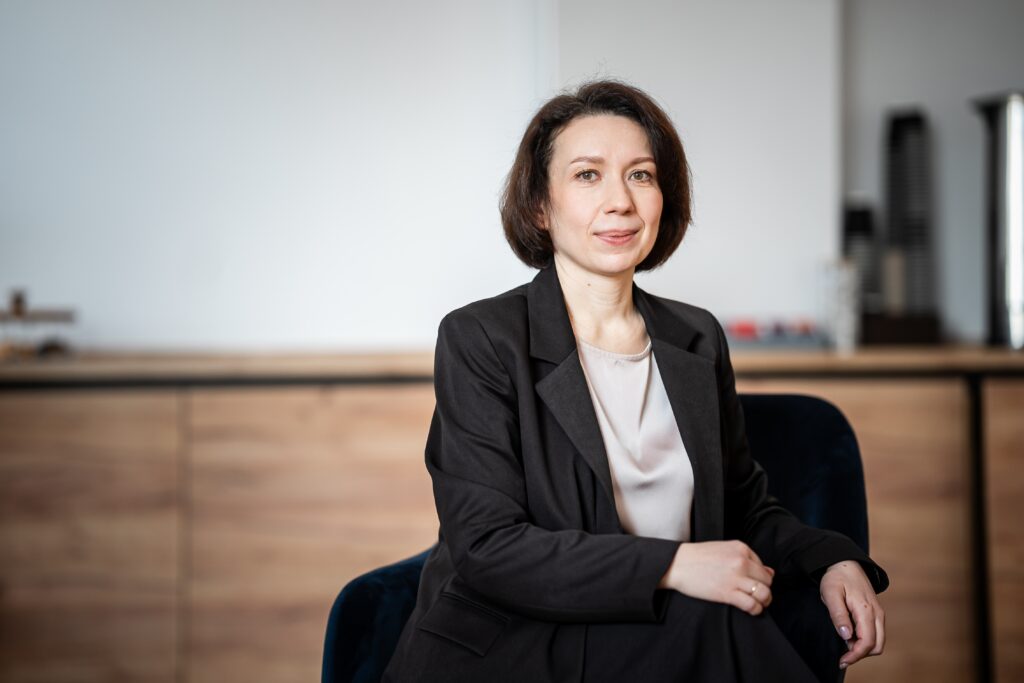
We sat down with Liliia Marachkanets, Executive Director of the Together with Kernel Charitable Foundation. She spoke about how the program came to be, why the foundation chose crowdfunding, what teams find most difficult, and where the program could go from here.
How did the idea for “My Community: Together With Kernel” come about?
It all started when we got to know the My City team. I spoke with Serhii Lukachko, head of My City, about collaboration opportunities. The mission of our team, Together with Kernel Charitable Foundation, is to help communities develop — to support active residents, volunteer groups, and local civic organizations.
Serhii talked about My City’s experience and one of their core goals: supporting local initiatives and building the capacity of civic organizations and volunteer groups through training, fundraising, and crowdfunding. Our interests and focus aligned. So we decided to run a training program and invite initiative groups and civic organizations to try to bring their ideas to life in the territories where Kernel operates.
Why did you choose the “crowdfunding plus co-funding” model rather than simply funding initiatives directly?
For one thing, crowdfunding is a tool for validating projects. We support a wide range of initiatives across many areas — from healthcare to culture and sports. The military dimension and veteran support are cross-cutting themes right now, with many different initiatives within them.
But we understand that communities need to become self-sufficient and learn to use a variety of tools to sustain their work and bring their ideas to life. Crowdfunding is one of those tools. Alongside it, the program included training in project management and all the related processes.
This is especially valuable for smaller, rural communities that do not always have access to educational resources. There is also something distinctive about this program: previously, we typically worked with institutions — education departments, municipal enterprises, medical facilities. Those organizations have staff trained in budgeting and planning, and every year they prepare project proposals in a structured format.
We had no prior experience working with individual residents — with active citizens. Some participants showed remarkable growth over the course of the program: they developed skills and built the core of a community that supports them. That community helps them grow, secure other grants, and form partnerships.
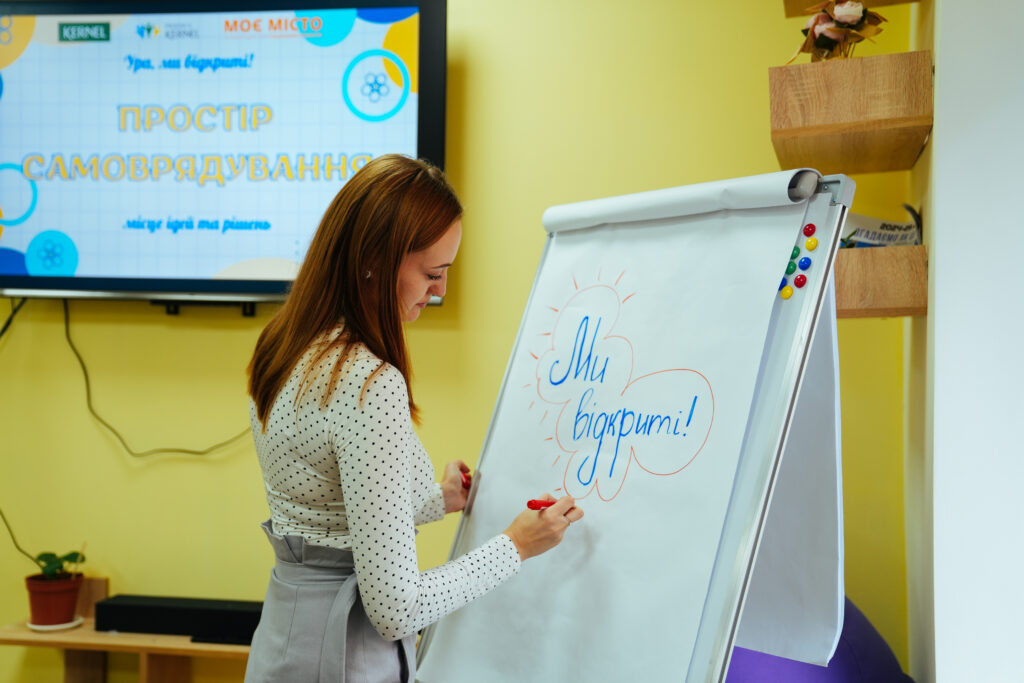
As for project management skills — from developing an idea to presenting it — when we were gathering ideas and selecting training groups, some participants struggled to articulate their concept clearly: its essence, its goal, why it was needed. By the end of the training, they had learned to formulate their ideas, plan a budget, and organize procurement — which is a critically important skill. Financial matters tend to generate the most questions. For a volunteer community, the requirements for raising and managing funds are more straightforward. But in our program, the standard is the same as for an established civic organization. That means understanding how to draw up a contract with a supplier, how to collect documents for accounting, and how to report on all of it.
It was also wonderful that the program included training on communication. People need to understand how to maintain relationships with their community. In my view, every topic covered was useful and necessary.
From the first to the second round, the number of applications grew from 296 to 411. How do you explain that?
The first round was a pilot with a focus on five communities. In the second round, we were no longer limited to those territories, so more communities could participate. On top of that, the first round produced strong results, and word spread. That builds trust.
In the first round, for instance, we held in-person presentations in each of the five communities to explain how everything worked. Because it was something new, even in larger cities like Poltava and Kropyvnytskyi — which were actively involved — there was some hesitation and skepticism. By the second round, both Poltava and Kropyvnytskyi were fully engaged and submitted a large number of applications.
The projects span a wide range of themes: veteran support, space development, education, STEM. Are there priority areas you would like to support more?
Our team recognizes that people and communities on the ground know better than anyone what kind of help they need. Of course, we have our own priorities — I already mentioned them: the veteran community, support for veterans’ families, support for military personnel. That said, the program itself does not focus exclusively on the military dimension. We work strictly within the civilian and veteran spheres.
We do not prescribe what projects must be about, because local communities understand their own needs. And when they reach the crowdfunding and fundraising stage, we can see firsthand how invested the community is in a particular idea. It is practical validation in hryvnias: you can tell whether an idea is a genuine community need or the preference of a small group of people for one reason or another.
So no — we will not constrain people’s choices of direction. There are, of course, occasional criticisms that we support cultural projects, children’s playgrounds, or other straightforward civilian initiatives during wartime. But in our view, that criticism does not reflect what we hear from veterans and military personnel themselves. When we speak with them, we often hear that they are defending their country so that their families and children can live in good conditions and have opportunities to grow. We believe that if a community supports something with its own money, that initiative is genuinely needed.

How does the war affect project implementation?
Unfortunately, there are real risks tied to the ongoing conflict. We felt this acutely in the second round, during intense enemy strikes against civilian infrastructure. In the Kharkiv region, one completed project was entirely destroyed. The situation in Chornomorsk is also very difficult. We are unable to finish implementing a project because the enemy is bombing schools, hospitals, vocational institutions, and civilian infrastructure.
But we believe that solutions will be found in time. The teams are deeply motivated to realize their ideas, and we are actively looking for ways forward — how to provide support, relocate projects, or find shelters or alternative venues where they can be carried out.
You mentioned that you rely on what communities support financially and that they know their own needs best. Does that align with your priority focus on veteran projects? Or are communities asking for something different?
It does align: there are quite a few veteran projects and community support initiatives. In the second round, we also saw a large number of space-focused projects — in libraries, youth centers, and other venues.
That tells us there is a real need to create places where people can come together. Such a space may be local in scope, but it can help people address many different challenges — especially during times of crisis. People find one another, talk through problems, and find solutions. The demand for community spaces is clearly there, and it matches our own vision. So I think we are moving in the same direction as the communities themselves.
Have you noticed teams on the ground beginning to collaborate and launch joint initiatives, reinforcing one another’s work?
When teams were formed within the same territory, they do interact, cooperate, exchange experience, and share knowledge. But these are not yet widespread cases. The pilot was concentrated in five territories, and the level of activity among groups there was higher. Now, participants are geographically dispersed, which makes interaction more difficult.
That said, in Kropyvnytskyi, for example, participant teams are performing exceptionally well. They communicate, collaborate, and develop joint initiatives. One standout case is the “Brave Coffee” project, which helped transform a space into an accessible, barrier-free environment. And they keep growing: they now run camps for veterans and actively engage the veteran community.
The needs and skill levels of rural communities and large cities can be quite different. Is there a significant gap between what smaller villages and larger cities like Poltava or Kropyvnytskyi ask for — in terms of projects, dynamics, and engagement?
It is important not to think in stereotypes, because people are different everywhere. There are very capable rural communities, and there are active, driven people in rural areas just as there are in cities. But cities do offer greater access to resources and opportunities — informational, financial, networking, and beyond. That is simply a fact.
The project ideas themselves depend on the local context. In Poltava, for instance, there is a railway station, so a team created a rest and support space for military personnel during relocation and transit. Other cities may not have a station, so that specific need simply would not arise there. It follows logically: no infrastructure, no problem, no demand. But conceptually, just as Poltava created a youth space inside a library, the Holovaniivska community in Kirovohrad Oblast created a similar space — as did many others. In Sumy Oblast, one team outfitted a space inside a bomb shelter. All of it flows from people’s real needs. Despite the differences between territories, they are all moving in the same direction.
How do you measure the success of the program?
By the longevity of its impact. After we step back from projects, the communities and active groups that were involved need to keep the initiative alive. That, for us, is success. They should continue to grow. When they build an ecosystem of partners around themselves and go on to develop their own programs, the impact compounds — and that is a double win.
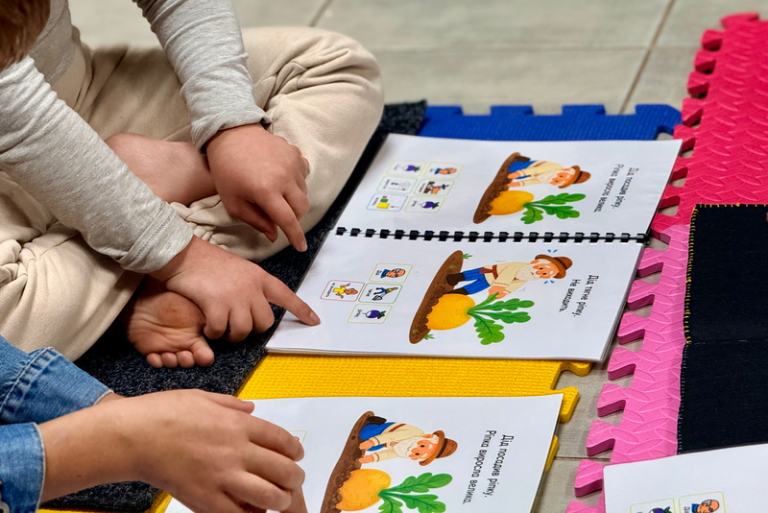
In Poltava, for example, a veteran hostel and a library have continued working actively. There is also a rural community where a small room has been turned into a youth space — it continues to operate and develop. In Starokostiantyniv, there is a remarkable cultural initiative centered on Samchykivsky painting. They continue to run workshops for military personnel, veterans, and community members, with a wide variety of activities. The veteran space in Starokostiantyniv is also going strong — they are even taking on additional infrastructure projects to improve accessibility, since the building entrance was not fully compliant. But they are thinking about it, improving, and people keep coming: veterans come, services are provided, and the work continues.
There is also an important distinction worth noting: we work with volunteer groups, civic organizations, and also with municipal enterprises and institutions where active individuals have taken on responsibility and introduced meaningful change through project work. For an institution, sustainability is built into its ongoing operations. For a civic organization, it is harder — that capacity, those skills, have to be developed.
The people involved need to keep learning: how to work with communities, partners, and funders, and where to look for financing. Sustainability is a bit harder to achieve in that context. That is why I often come back to the example of “Brave Coffee” — it is a case study in maximum team engagement.
A lot of the program’s work involves documents and procurement — which is fundamentally about transparency. How important is that to you, and why?
Transparency matters not just to us, but to everyone — it is a tool for building trust. It is a non-negotiable element and a basic standard that should apply to every organization. I do not have people in my circle who tolerate non-transparent decisions. So this is simply normal practice.
In this program, working with documents requires genuine skill. People do not always make mistakes out of bad intent. Often, it comes down to a lack of experience with this kind of work and unfamiliarity with the required format. That is why teaching and demonstrating these practices is so important. The My City team and their accounting department do an excellent job of walking teams through every procurement and every completion act. That is exactly the right approach. Transparency has to be demonstrated not in words, but in facts and documents.
Do teams find it difficult?
Of course they do — nobody enjoys paperwork. We are used to creating things, making things happen, and administrative tasks are not the exciting part. They require sustained focus and attention to detail. Sometimes they take a great deal of time, because on top of this one project, everyone is juggling their own work and responsibilities.
It is not enjoyable — that is fair. But discipline has to be developed, and these things have to be learned. It is a normal professional practice to be able to clearly show documented expenses and their supporting evidence.
And it genuinely does help build trust between people. When we see that a team took the work seriously, collected all the documents, prepared them on time, and filed their reports properly — we understand that they value our contribution and the community’s contribution, and that they are prepared to invest their own energy and skills in continued growth. In a way, that too is about longevity.
Can the program serve as a catalyst for collaboration between teams, civic organizations, initiatives, and institutions?
The program is designed to foster direct interaction from the outset. When we select participants — if a civic organization is not formally registered but exists as a community group, a volunteer collective, or a group of activists — we ask for a letter of confirmation from local authorities or an institution stating that they are willing to take ownership of the equipment, infrastructure, or space. The training itself is also built around dialogue and interaction.
I am convinced that this helps civic organizations build working relationships. We see it in the participants from the first round, and we hope to see it in the second as well. Even now, after initiatives have been implemented, we can already see that interaction and collaboration are happening.
Does local government meet you halfway? Have you encountered resistance?
Local government, like any institution, operates within the boundaries of its mandate. When our requests and expectations fall outside what local authorities are empowered to do, there are legitimate constraints. The answer is simply to communicate, to engage, to look at the situation from the partner’s perspective, to find common ground, and to work through it.
What is your vision for how the program could develop going forward?
We held a strategic session with the My City team to map out how we want to grow and move ahead. There are various ideas and directions being developed, including reformatting some of the projects. One promising path we see is broadening our circle of partnerships, deepening our collaboration, and bringing in additional donors — such as the UNDP or other institutional funders.
We also see value in learning to work with the Ukrainian diaspora, which has the potential to support local community initiatives. There is also a demand for leadership development among veterans in the context of local governance and local improvement initiatives. Veterans could be genuine agents of change, and a dedicated program for them is something we have discussed as well.
There are many ideas on the table — we will see how the situation develops. But I am confident that we will find a way forward and find the right solutions. We are definitely not stopping. We will simply adapt and evolve.
Be part of the change.
More Stories & Insights
Interviews Partnerships
Interviews Reporting
Learning News

Learning

Interviews