
Building Long-Term Relationships With Donors: What It Takes to Earn Trust

Interviews Partnerships

For many organizations, a grant feels like the finish line after a long race: the application has been submitted, the budget approved, the contract signed. But for those who work with donors systematically, a signed agreement is only the beginning. The more important question is whether this grant will become the first step toward a multi-year partnership — or remain a one-off that has to be rebuilt from scratch next time.
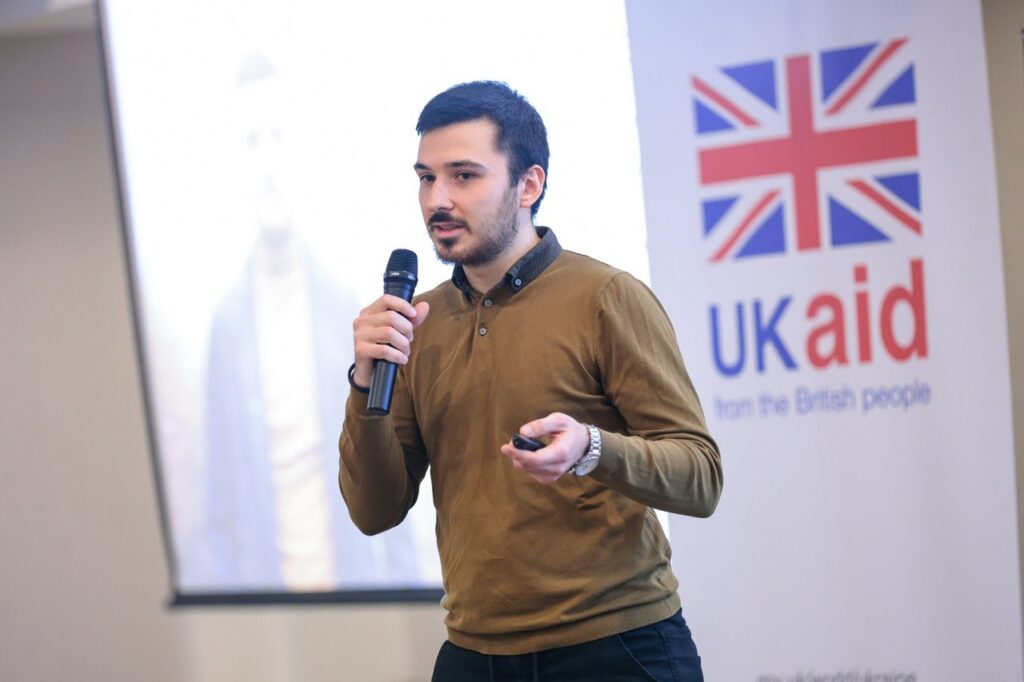
We sat down with Mykola Apetyk — International Partnerships Manager at the My City civic organization — to talk about how to build lasting relationships with international donors. He shares hands-on experience of how an organization moves from being a “grant recipient” to becoming a trusted partner: what needs to be built internally, how to communicate with donors, and what to do when things do not go according to plan.
Tell us about your background and how you came to grant writing.
My journey in the civil society sector began back in 2017–2018, at the Ukrainian Leadership Academy, where I first worked on projects for local communities. That is when I understood that a good idea without resources stays just an idea. That realization brought me to grant writing: I wanted genuinely useful projects to actually happen.
From there, I took on various roles — grant writer, project and grants manager, fundraising coordinator. I worked with USAID, NDI, the International Renaissance Foundation, the Black Sea Trust, and other donors. For many years alongside that, I helped young people learn how to write project proposals and helped establish youth councils in village and city administrations. Over that time, I raised more than 800,000 euros for social and youth initiatives, and we implemented more than 50 projects reaching over 30,000 people.
Now at My City, I am responsible for international partnerships — which means it is no longer just about writing applications, but about making those partnerships with international donors sustainable.
What is the fundamental difference between “receiving a grant” and “building a relationship with a donor”?
A grant is an event: you submit an application, go through a selection process, and sign a contract. A relationship is a process that continues between grants and after them.
Here is a practical test: if, after a project ends, the donor does not remember what makes your organization distinctive and you have to introduce yourselves all over again — you received a grant, but you did not build a relationship. If the donor reaches out to tell you about new opportunities, consults you on their priorities, or recommends you to colleagues — that is a relationship.
From my perspective as an international partnerships manager, the difference also comes down to how the donor sees you: as a reliable partner or a one-time contractor. Reliability is built from small things — timely reports, honest communication, predictability. That is what earns you the second grant, and the third.
Can you really have a “relationship” with an institutional donor, or is it always a relationship with specific people?
Formally, you work with an institution. In practice, you communicate with people: program managers, monitoring specialists, financial officers. So I would say relationships exist on two levels.
Personal relationships help: with someone you trust, it is easier to discuss a difficult situation, get a faster response, and better understand what the donor actually wants. But personal rapport does not replace institutional reputation. Funding decisions follow procedures, and no amount of goodwill will save a weak application or a problematic report.
My position is that you need to build both levels. Personal relationships are the lubricant in the mechanism — institutional trust, meaning documents, reporting, and results, is the mechanism itself. If you rely only on one person, the relationship disappears when that person does.
What happens to a relationship when the key contact person on the donor’s side changes?
It depends entirely on how the relationship was built. If it was strong, the departing colleague will typically introduce you to their successor, and the transition is smooth. If not, you often have to start from a blank page. That is why I try to build relationships that rest not on a single individual, but on the organization’s reputation and the quality of its work.
What mistakes in the early stages of getting to know a donor can damage a relationship for years?
The worst thing is when an organization uses pressure or manipulation from the very first conversations — “give us money,” “you owe us.” Donors remember that for a long time. The second mistake is presenting a polished application that does not reflect actual organizational capacity. Donors look at the team and at the internal workings: are there policies and procedures in place, is it clear how the organization operates? Without those, there is no trust.
How important is it to meet a donor in person?
Extremely important. Every major project I have been part of was born out of a face-to-face meeting. Written communication transmits information; a personal conversation builds the understanding and trust that are very hard to develop over email.
How often and in what format should you communicate with a donor outside of formal reporting points?
It depends on the situation and on the donor. If there is a space for dialogue, it is worth nurturing a warm, friendly relationship — but it must stay within the donor’s own policies and procedures, especially with organizations like the UN, where communication rules are very clear. Friendliness should never raise questions about transparency.
How do you tell a donor about a failure or a delay in a way that actually strengthens trust?
Tell it straight. Donors are people too, and what matters to them is seeing that their partner is honest. But honesty alone is not enough: you need to arrive with the bad news and a plan for how you will address the situation. That turns a problem into proof of your accountability.
What do you put into reports beyond the required indicators?
Photographs, success stories, and meaningful changes that happened because of the project. Numbers show scale; stories show the real people and real outcomes behind them.
Do you invite donors to see project results in person?
Yes. Given the security situation in Ukraine right now, that is difficult, so we try to show results online: video calls, shared events, live streams from project outcomes. It does not replace an in-person visit, but it helps donors feel the project from the inside.
What does an organization do in the first year of a partnership to lay the groundwork for a second and third grant?
It overdelivers on its targets, collects feedback from the target audience and partners, and starts advocating for the project’s continuation before it is even finished. Do not ask for continued support in the final month: by that point, the donor needs to have already seen both the need and your results.
How do you plan the development of a donor relationship over three to five years?
I move in stages. First, analysis: what does the donor want, what are their priorities? Then I build the organization’s own capacity to meet those priorities. Only then do I come with specific proposals. That way, the partnership grows steadily rather than in fits and starts.
Does an organization ever choose to walk away from a donor relationship?
It happens. The most common reasons are: overly high standards and requirements relative to cost-effectiveness, unrealistic targets that cannot be met, or the general complexity of working with a particular donor. If a partnership consumes more resources than it produces in results, that is a signal to reconsider it.
How do you close out a project in a way that keeps the door open for future collaboration?
Have a final conversation with the donor: discuss what worked and what did not — a proper lessons-learned debrief — and immediately present a concept for continued collaboration. That way, the project ends not with a period, but with a pause before the next step.
Do you stay in touch with donors when there is no active project?
Sometimes, yes — but the most natural way to do it is through events or occasions: professional gatherings, holidays, significant professional or personal dates. That kind of contact feels genuine rather than like a reminder that you exist.
What should you do if a donor declines to renew funding?
First, understand the reasons — their concerns and priorities: why that answer, what has shifted in their focus. Then propose alternative concepts that better fit what they need now. A rejection does not mean the end of a relationship, if you handle it the right way.
What advice would you give a small organization about donor relationships?
Build the foundation first — policies, procedures, internal rules. Then expand your partnerships, projects, and scale. Donors trust organizations that look reliable.
Be part of the change.
More Stories & Insights

Interviews Reporting

Interviews