
“Crowdfunding isn’t just about money — it’s not about money at all. You can find funding elsewhere,” — Anna Buhaieva

Interviews

Crowdfunding is more than a way to raise money — it’s a tool for building communities and driving social change. Anna Buhaieva, the author of five crowdfunding campaigns on the “My City” platform, helped raise 806,289 UAH to support creative workshops and programs for children and young people with intellectual disabilities. Her story follows a path from a modest first campaign to forming a community that united hundreds of people around a mission of change. In this interview, Anna shares how her projects were born, why she chose crowdfunding, and what helped her navigate the challenges along the way.
Tell us about your crowdfunding projects — what were they, what goals did they serve, and what motivated you to begin?
We launched five projects on the “My City” platform. At first, we were raising funds for a sewing workshop, then for a ceramics workshop — both designed for young people with intellectual disabilities. We also raised funds to restore all workshops after the full-scale invasion, then for the “Super Friends” project to bring in regular support, and most recently, for a summer camp for children with autism.
We started fundraising because we realized a terrible truth: almost all children and young people with intellectual disabilities live in isolation. Even though their right to education and employment is guaranteed, in reality tens of thousands of people live as if under a lifelong lockdown. Like everyone else, they need communication and friendship, yet they remain isolated in their homes or closed institutions despite having committed no crime.
As mothers, we understood that when our children grew up, nothing awaited them except the horrors of psychoneurological institutions — an absolute void. My son was eight at the time, attending an inclusive class. That’s when I realized he would always remain different, as if operating on another system. There was no point in comforting myself with illusions of “reaching some imaginary norm.” Norms are vague, and being slightly outside them shouldn’t mean a lifetime of loneliness. Once I understood something had to be done, I found other mothers, and we timidly launched our first campaign for a sewing workshop — 20,000 UAH in 10 days.
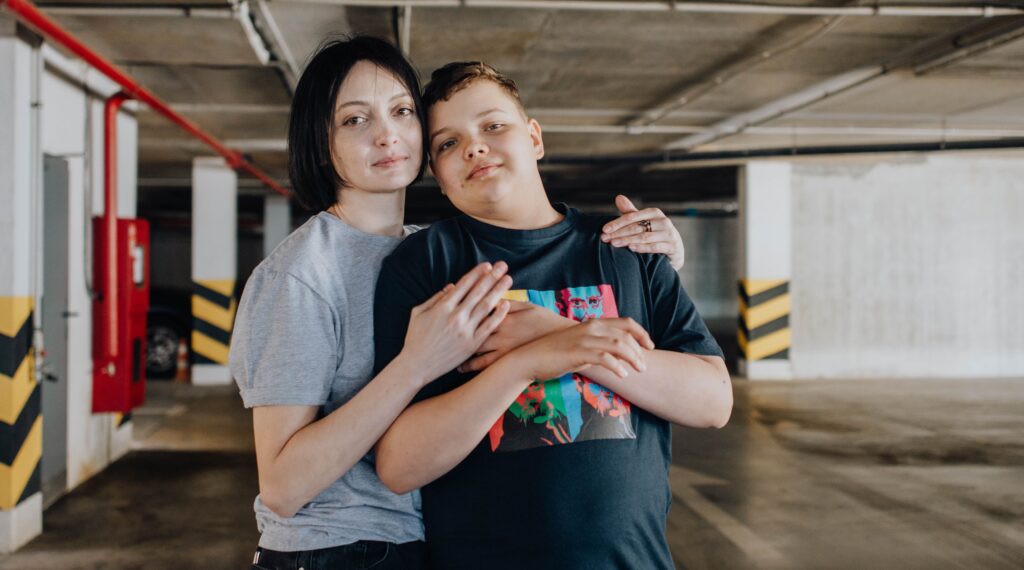
The sewing workshop became more than just a workspace — it turned into a play club for kids. It became a space we, as mothers of children with autism, never had. A space where we understood each other, where our kids were accepted, and where we knew they wouldn’t be pushed out, as still happens elsewhere. That workshop became the foundation for growth: in its first year alone, we fundraised 300,000 UAH and reinvested it into expanding the project the following year.
Then we received our first grant — from the International Renaissance Foundation — for the ceramics workshop. They agreed to co-fund 100,000 UAH if we raised the same amount through crowdfunding. Back in 2020, raising 100,000 UAH felt extremely ambitious — even the “My City” team doubted it. But we raised the funds ahead of schedule and opened a large creative space that included ceramics, sewing, printing, and art workshops. There we offered young people meaningful, age-appropriate activities, without infantilizing intellectual disabilities, which still happens far too often. We studied artists like Picasso and Maria Prymachenko, translated their styles into our work, printed, sold, or used them for other campaigns. For example, the workshop restoration campaign after the invasion raised 413,381 UAH, around 200,000 of which came from sales of our products with illustrations from our art workshop.
We launched “Super Friends” believing the workshops would become self-sustaining over time, and we searched for people willing to support us regularly. Now we understand clearly — projects like ours are always subsidized. Even in countries like Germany, where we took part in an exchange, they operate with subsidies. I can’t say we managed the project well — we lacked the capacity and time. Our goal was to secure 165,000 UAH per month through recurring donations. We didn’t reach that target, and over the entire campaign raised only 239,956 UAH. Yet I still consider it successful — it covered several tens of thousands monthly, helping us keep the project afloat and continue developing it. It also gave us something equally important: the feeling of a reliable shoulder to lean on, which means everything when you’re exhausted or overwhelmed.
The only unsuccessful campaign was the one for the summer camp. We didn’t have enough management capacity, and we knew it. But we hope to finish the campaign this winter and still take our children and young people somewhere to rest and reset.
Why did you choose crowdfunding instead of grants or business funding? And why specifically the “My City” platform?
Back in 2019, we were a newly formed organization with no grant history or operational record. We were just learning how to write applications, and while learning, we often funded our own projects — a New Year’s party for the kids and so on. Sometimes we even brought equipment or materials from home. We knew that applying for grants as an organization that had just been founded and had no track record meant wasting time and energy.
Through targeted ads, I found a lecture by your manager, Yelyzaveta Konkina, featuring another successful campaign author. We met Liza, and she encouraged us to submit our project for crowdfunding.
It was a warm and incredibly helpful experience. Liza worked with us very professionally — she sent our application back for revisions five or six times, showing us exactly why something needed to be phrased differently. She didn’t “fix it for us,” she taught us. We learned so much.
After that, we stayed with “My City” because it had already become a friendly environment — with warm communication and mutual understanding. And warm communication matters. When we were trying to restore the workshops after the invasion, we couldn’t secure grants — many donors don’t want to fund restoration, preferring to support something new.
After launching the sewing and ceramics workshops, we realized crowdfunding isn’t about money — not really. You can find money elsewhere. Crowdfunding is a powerful tool for building community, forming partnerships, and finding volunteers.
After the full-scale invasion, we lost a large part of our community. That’s why, for both the workshop restoration and the “Super Friends” campaigns, we consciously chose crowdfunding to bring more people into the project.
What challenges did you face during your campaigns, and how did you navigate them?
Honestly, I wouldn’t say we faced “problems.” We were passionate about our mission, so any difficulty felt like a challenge, not a setback.
We faced our first major challenge during the ceramics workshop campaign — raising 100,000 UAH was no small feat, especially in 2020, when fundraising wasn’t as widespread as it is now. At one point, we hit a plateau — the donations stopped coming in. It was our first experience like that, but instead of worrying, we felt energized: “What can we do next?”
We brainstormed, created a presentation of the products made in our sewing workshop, found bloggers, and reached out to Instagram communities. And with every campaign, whenever we hit obstacles, we kept inventing new approaches. Crowdfunding is never boring.
The only thing you truly need is time and energy. With the summer camp campaign, we had plenty of ideas, but simply lacked capacity. We were overwhelmed. In our case, campaigns fail only when we’re completely buried in work and can’t handle the load.
You often mention the importance of community. How do you maintain and engage yours?
Starting with “Super Friends”, we began collecting mailing addresses and sending email newsletters. But because there were only four of us — four active moms — and the project grew quickly, we couldn’t keep up. There were too many tasks. Still, we tried to communicate with donors, send monthly newsletters, and manage our Patreon.
Some donors didn’t want to donate through crowdfunding — they preferred transferring directly to our organization’s account. They often found me on Facebook, and I tried not to lose contact. Sometimes I would send videos like: “Thanks to you, look how wonderful our day went.” One boy celebrated his birthday with peers for the first time in his life — before that, he had only celebrated with family. I tried to share such moments, so donors would feel the impact of their contribution — that their money wasn’t “lost,” but transformed lives, even if only a few.

But I can’t say we succeeded — most people who supported us once or twice eventually drifted away. We needed funding for a dedicated communications manager — someone to send newsletters, write posts, invite donors to events, track contacts, and ensure no one slipped through the cracks. We couldn’t handle that challenge. We lacked the experience to understand that attracting new funding requires significantly more effort than maintaining existing relationships. We should’ve done everything possible to keep anyone who supported us even once. If someone donated twice, they were practically our partner-in-crime. But back then, given how quickly the project grew, and given that we were volunteers barely securing rent and paying a single specialist, we simply couldn’t afford a communications manager or anyone else.
Now we’re trying to do what we should have done from the start — build partnerships, nurture a community of ambassadors, and work closely with donors.
How did you experience successful and unsuccessful campaigns emotionally?
I may sound less optimistic here, but I believe there are a few reasons campaigns fail. The first is when a campaign is doomed from the start, like our summer camp fundraiser — we launched it knowing the likelihood of failure was high. But we stayed calm — it’s better to grow steadily than to leap too high and break your neck. Even though we didn’t reach our target, the 24,000 UAH we raised still meant a lot. We felt supported again — reminded that we weren’t alone, that people shared our mission and values.
The second reason campaigns fail is when the author doesn’t truly need it. If the author isn’t passionate, donors can sense it. Why should I donate to a project the author themselves doesn’t fully believe in?
Maybe I’m wrong, but I think unsuccessful campaigns often fail because the author lacks confidence — in themselves or the idea. Yes, the professional elements matter — a well-written text, a good visual — but the core is belief. Belief in yourself and the change you’re creating.
We never struggled with belief — our project was born out of maternal love and faith in our children. Yes, fear fueled us too — fear that our kids would be isolated, or worse, end up in psychoneurological institutions. These places are, without exaggeration, concentration camps left over from the Soviet era: water given by schedule, teeth pulled out as punishment, people sedated with heavy medications so they lie still in rooms with 6–10 beds, no privacy, no leisure. That fear became a powerful engine. We had nowhere else to go; the state offers our children nothing humane.
When our campaigns gained momentum, we felt supported — people cared, even if this wasn’t their pain. Every donation, repost, or volunteer action felt like a message: “You’re not alone.” Those moments feel like growing wings. You know that even if you collapse from exhaustion, someone will catch you. When we completed a campaign, it felt like winning the lottery or crossing the finish line first in a marathon — something in between. After the ceramics campaign, I remember we bought champagne, went to Shevchenko Park, drank from paper cups, and laughed with this slightly hysterical joy — very student-like, very warm, very alive.
We took the last campaign calmly — we understood our limits. It was expected, so it didn’t hurt.
What is the impact of your project? How do you observe and measure it?
Its impact turned out to be far broader than we imagined. After our work, many parent organizations began to appear — parents realized they could shape the changes they wanted to see and began believing in themselves. We didn’t expect to become an example of creating the future with your own hands.
It was comforting — first, it felt good to know we were doing something meaningful, and second, the more civic organizations exist, the more people there are around who care. Philanthropy and civic engagement grow.
The direct impact is on families and young people who use our services. We see many stories that bring us to tears. Some hadn’t left their homes for 7 or even 14 years. Some attended state institutions where they experienced physical or sexual abuse. We change the world for these people and give their parents a chance to live — to rest, go to the sea, work, or simply breathe.
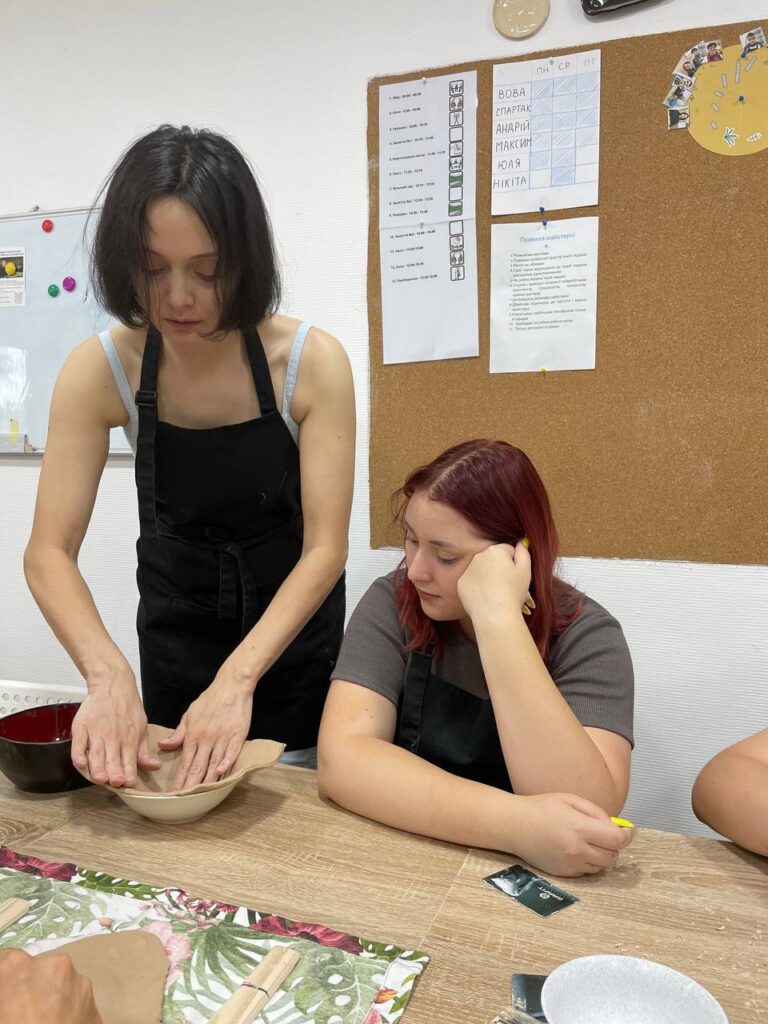
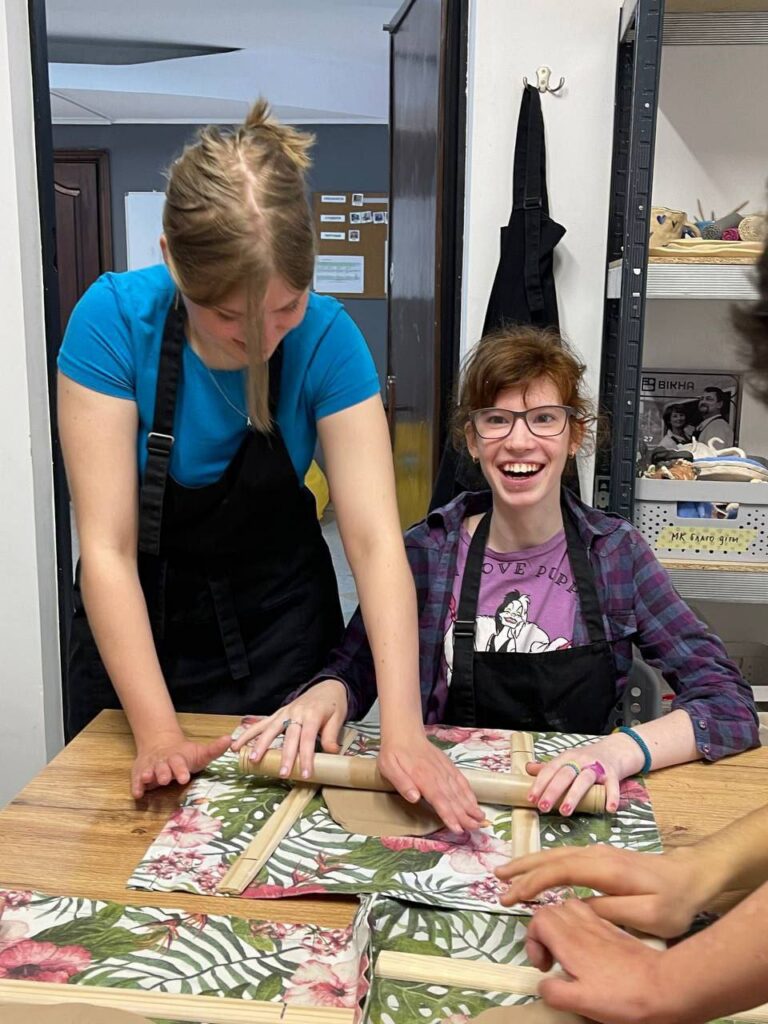
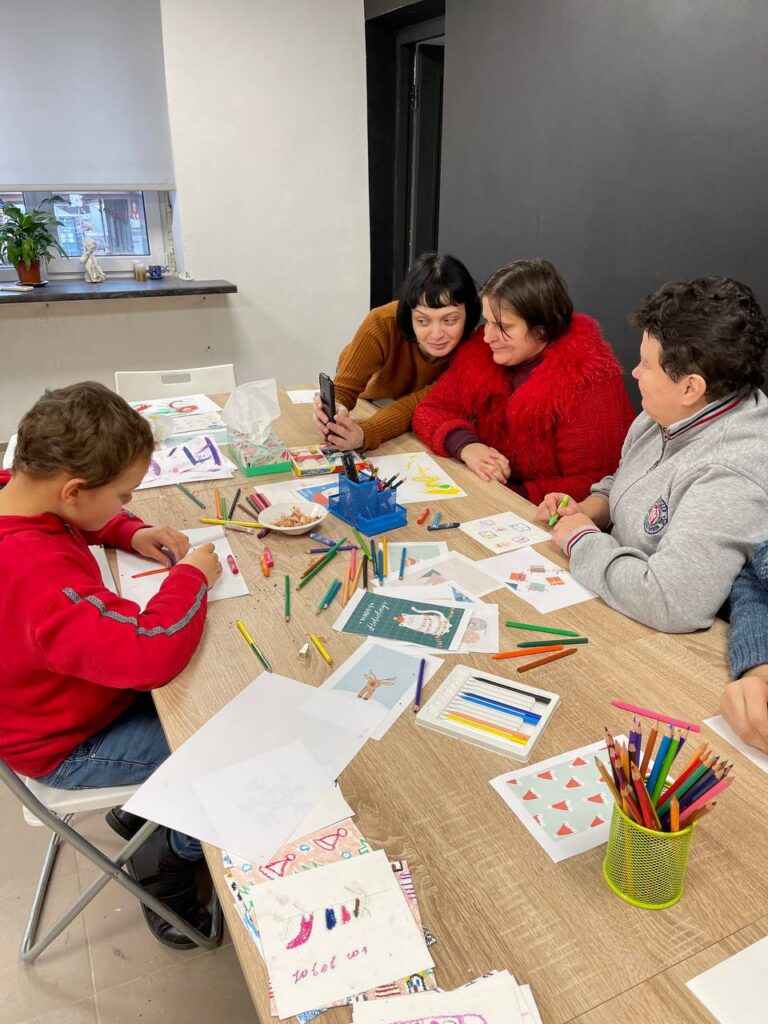
But this is only the beginning. We need to grow the project, stabilize it, scale it. Today there are successful supported living programs in Lviv and Kyiv — where young people live in apartments with assistants instead of institutions. Everyone has their own room. Assistants rotate, reminding some to make their bed or brush their teeth, while others need more support. People can live with dignity, like in any civilized country.
We understand our biggest work is still ahead. The impact we’ve made in six years is meaningful, but far from enough. Despite many happy stories — thanks to our work, the “My City” platform, and hundreds of supporters — many people with disabilities still have no right to a dignified life among others. One of our oldest students is now 65 — our workshop is the only place he can come to socialize, play UNO or Jenga, or show photos from his summer. We cherish the impact our students feel, but we know we can’t stop here.
And finally: what is the most important advice you would give to people who dream of creating change and are planning their first campaign?
Believe in yourself, even when no one else does.